Chicken Tikka Masala
Foray into British food
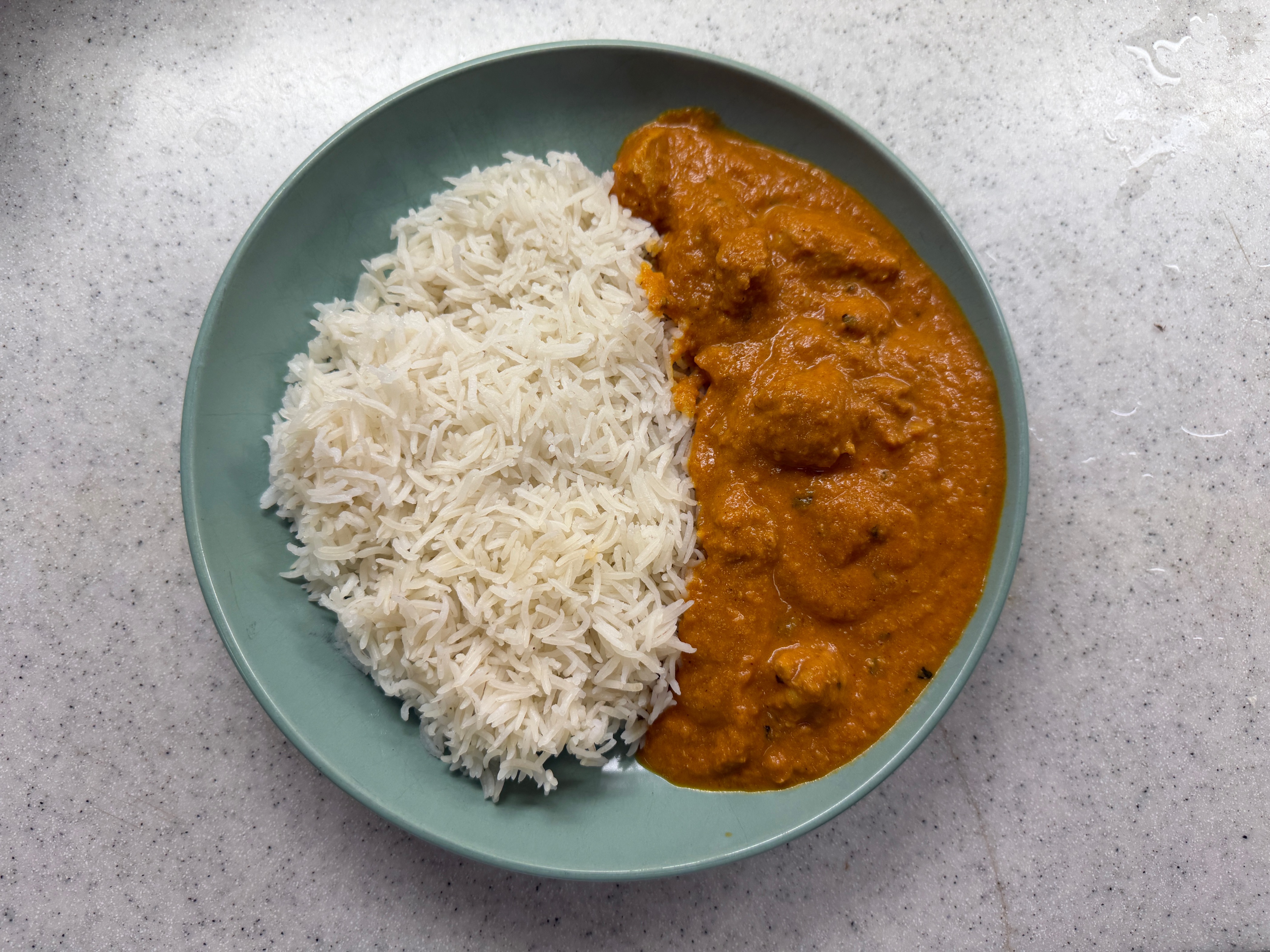

Ingredients
- 1.5 pounds of skinless chicken thigh (thigh strongly preferred over breast). Bones are fine, though this recipe is written for 1.5 pounds of boneless meat (though I don’t think it matters too much)
- Lemon
- Ginger paste
- Garlic paste
- Medium-sized red onion
- Yogurt: full-fat Greek yogurt or thick strained yogurt
- Ghee
- Heavy cream (if you don’t have this, you can substitute with milk or normal butter)
- Butter
- Around 600g fresh or canned tomatoes. I like to use 1 1/2 cans of canned tomatoes.
- Spices
- Kashmiri chili powder
- Ground cumin
- Ground coriander
- Ground turmeric
- Garam masala
- Kasuri methi (dried fenugreek leaves)
- Bay leaf
- Green cardamom pods
- Whole cloves
- Whole cinnamon
- Requires a blender
- Optional: green chilies, if you want heat
I recognize this is a lot of spices likely not in one’s cabinet if you don’t regularly make Indian food. I am not an expert at Indian food, but if you were to ask me, I think the most optional ingredients are the bay leaves, whole cloves, and dried fenugreek leaves. You can always omit other ingredients, but of course the more you omit the more subtlety in the flavour you’re missing. I think ghee is also not too necessary; you can replace with normal butter or neutral oil (though I personally use ghee).
You can buy jarred ginger and garlic paste, or you can make your own. It’s very easy if you have a grater at home. One thing to keep in mind is that the strength of the ginger paste depends a lot on whether you’re using jarred or fresh ginger. If you are using a fresh strong ginger, you would only use half of same amount of jarred ginger. I’ll comment on this below.
Marinating the chicken
Marinate the chicken for 4+ hours in the fridge, ideally overnight. The marination step consists of two stages, though you can definitely combine them if you’re short on time.
First marination
Cut the chicken into roughly 1-1.5 inch pieces. Mix with
- 1 tbsp lemon juice
- 1 tsp salt
- 1 tsp Kashmiri chili powder
Let sit for around 25 minutes. This will tenderize the chicken
Second marination
To the above mixture add
- 1/2 cup yogurt
- 3/4 tbsp ginger paste (if you are using fresh ginger, I’d reduce this to 1/2 tbsp)
- 1 tbsp garlic paste (or finely minced garlic)
- 1 tsp Kashmiri chili powder
- 1 tsp coriander powder
- 1/2 tsp ground cumin
- 1/4 tsp turmeric
- 1/2 tsp garam masala
- 1/2 tsp salt
- 1 tbsp neutral oil (e.g., canola)
- 1 tsp crushed kasuri methi (dried fenugreek leaves)
If you don’t want to wait 25 minutes for the first marination, I think it’s fine to do both at the same time.
Note that the amount of ginger depends on how fresh and pungent the ginger is. I am not sure how to quantify the strength of a ginger, but I would skew on the side of 1/2 tbsp if you are not sure. The first time I made this the result was delicious, but in my opinion a little too pungent/gingery.
I also want to comment that you don’t have to be too precise with the measurements. You definitely don’t need to be as precise with everything as you might want to be with baking.
Refrigerate for a few hours, or preferably overnight.
Frying the chicken and making the masala sauce
Take out the chicken from the fridge and let it sit at room temperature for 30+ minutes (this isn’t necessary, but always helps to have your meat at room temperature).
There are a bunch of moving parts when you actually get to cooking. Let me give you a high-level summary of what you need to do to help make this efficient.
- Fry the chicken + marinade to get browning
- Fry the red onion until brown
- Blend the onion with the tomatoes
- Simmer the browned chicken with the blended onion/tomato sauce.
There are a few considerations. Firstly, if your blender cannot tolerate hot liquids, then you need to blend your onions with your tomato BEFORE heating up the tomatoes. In this case, I’d recommend leaving your tomato (canned or fresh) in the fridge, put it in the blender, then add the hot fried onions and blend. I made the mistake of cooking the tomatoes with the onions before blending, and then realizing my blender can’t tolerate hot liquids.
Secondly, frying the onions and chicken can happen in parallel, which makes the process much more efficient, especially if you are cooking with someone else. After blending your sauce, you can then add it to the pan in which you fried to chicken to incorporate all of that nice browned sauce flavor. Some recipes say that you have to fry the chicken first, then fry the onions in the same pan in which you fried your chicken, and then blend. I don’t think that is really necessary, since you will use all that fried chicken marinade in the end anyways, and now you can fry the chicken and onions in parallel and save a bunch of time.
Alright great. So now let’s describe each step. To help organize, we will need:
- 2 tbsp ghee
- 1 bay leaf
- 3 green cardamom pods
- 2 whole cloves
- 1 piece of whole cinnamon, around an inch
- 1 medium/large red onion, sliced
- 1/2 - 3/4 tbsp ginger paste
- 1 tbsp garlic paste
- 1 1/2 tsp ground coriander
- 1 tsp ground cumin
- 1 tsp Kashmiri chili powder
- 1/4 tsp turmeric
- 1/2 tsp garam masala
- 600g canned or fresh tomtaoes
Frying the chicken
Fry the chicken at a medium heat until you get browning. I would not use a high heat, otherwise your chicken and marinade will burn. Note that chicken thigh doesn’t overcook, so you don’t need to sear it at high temp like you would a steak. Just fry it lightly until you get browning and take out the chicken. Some recipes will say you want light charring; I personally don’t like to get too much char because of off flavors, but either way just fry until you get your desired level of burnt/brownedness. Don’t worry if the chicken isn’t all the way cooked through; it will cook once we simmer it.
Frying the aromatics and blending
In a pan, add about two tbsp ghee and one tbsp neutral oil. To the oil add one bay leaf, three green cardamom pods (lightly crushed), two whole cloves, and one cinnamon stick piece (around one inch). Fry lightly to bloom the spices (do not fry it at high temperature; in this step, smoke is bad).
After frying lightly for around 30 seconds, add one medium-large sliced red onion. Since the onion will be blended, no need to finely dice it – just slice it enough so that it can be fried effectively. Fry until the onions are golden brown. Then add 1 tbsp garlic paste and your ginger paste and fry until the raw smell disappears. Add your ground spices (1 1/2 tsp coriander powder, 1 tsp ground cumin, 1 tsp Kashmiri chili powder, 1/4 tsp turmeric, 1/2 tsp garam masala) to the pan and fry briefly. You can add a splash of water here to make sure the spices do not burn.
Now, remove the whole spices (if you can’t find them, it’s find if you blend them up too) and blend well with your tomatoes. Some recipes say you should simmer the tomatoes in onion/spice mixture first, but I don’t think that is too important. If your blender cannot tolerate hot liquids, then blend now.
After blending, return the sauce to the pan you fried the chicken in and simmer. Simmer on medium/medium-low heat with the chicken for around 20 minutes. You should simmer until it is not watery and it looks thick, glossy, and concentrated. You should also not taste raw tomato flavor.
Finish the sauce
Add two tbsp normal butter ot the sauce and 1/3 cup heavy cream. Finish with 1/2 tsp garam masala, 1 tsp fenugreek leaves, salt to taste, sugar to taste, and an optional squeeze of lemon.